Choosing between a variable frequency drive and a vibration motor starts with the job you need done, not the hardware itself. If your motor is three-phase but your workshop only has single-phase power, a VFD can power it and give you speed control. If you need consistent vibration for a screen, hopper, or food-processing line, a self-contained vibration motor with a speed regulator solves that directly. This head-to-head compares the 7.5KW 220V VFD and the 110V 120W vibration motor with controller to help you decide which motor control component belongs on your bench.
Quick verdict
Pick the 7.5KW VFD when you need to run a 10HP three-phase motor from a single-phase supply and want adjustable frequency. Pick the 110V 120W vibration motor when you need a compact vibration source with a built-in stepless speed regulator, and it is priced 45% below the VFD.
At a glance
| Product | Listed Price | What It Does | Best For |
|---|---|---|---|
| 7.5KW 10HP 220V VFD | USD 119.34 | Converts 1-phase 220V input to 3-phase 220V output; SPWM control; 0-400Hz frequency range | Running three-phase motors from single-phase power with variable speed |
| 110V 120W Vibration Motor with Controller | USD 65.08 | 120W single-phase motor with stepless speed regulator; 3600rpm | Adding vibration to screens, hoppers, conveyors, and food machinery |
Where each product wins
The VFD wins for speed control and phase conversion. It takes a single-phase input and outputs three-phase, making it useful for hard-starting loads like air compressors and HVAC units as well as variable torque loads like pumps and fans. The wide frequency range and two sets of digital and analog control terminals give you much more flexibility than a basic on-off switch.
The vibration motor wins for simplicity and price. It is a complete vibration source with a controller, so you don't need extra hardware. The aluminum-alloy housing is compact, and the 120W pure copper motor delivers enough force for industrial and food machinery. At 45% below the VFD, it is the lower-priced way to add adjustable vibration.
Product notes
7.5KW 220V VFD
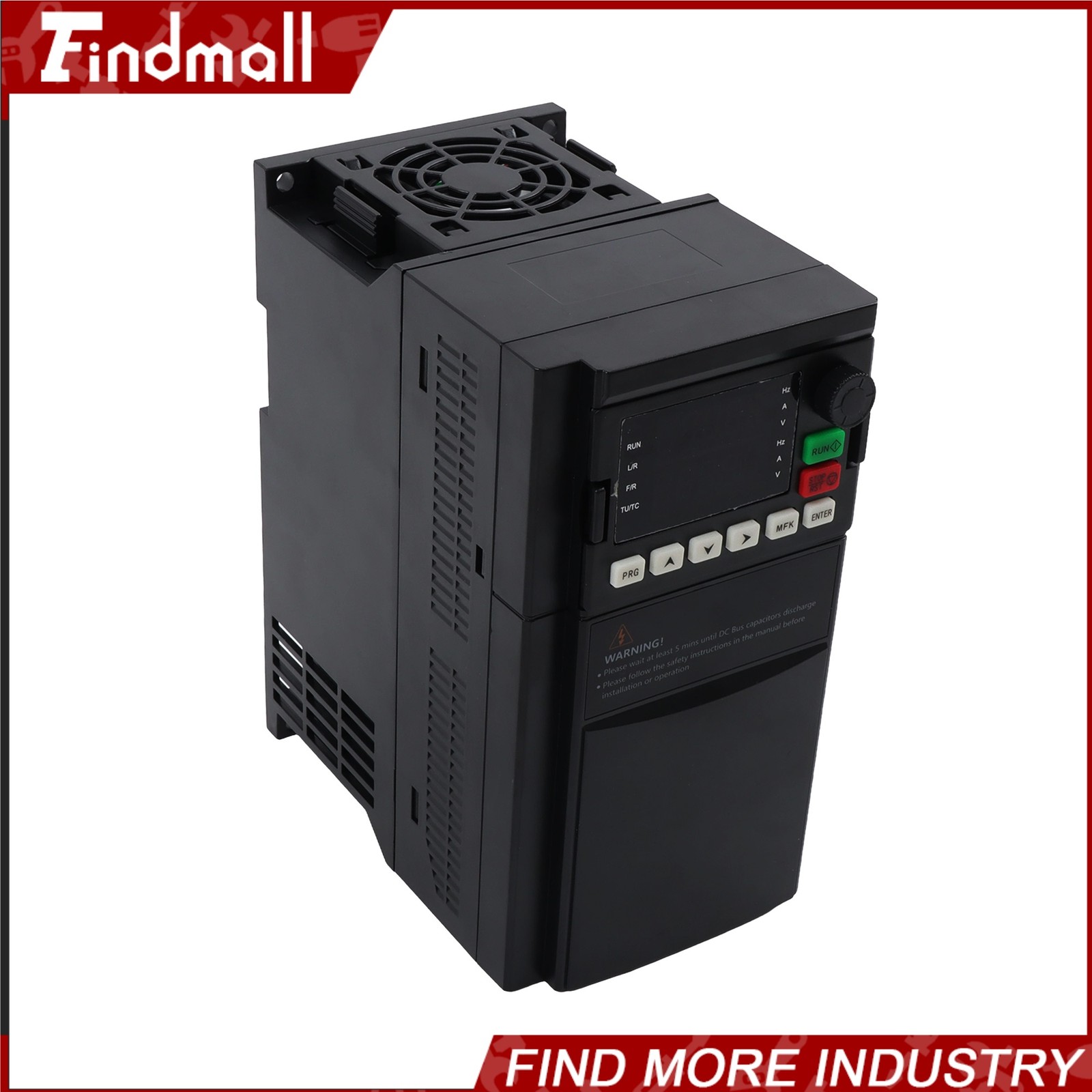
This VFD is the right choice when your priority is controlling an external three-phase motor. It accepts 220VAC input on the R and S terminals for single-phase use, then outputs three-phase 220V. The SPWM control system provides frequency adjustment from 0 to 400Hz, so you can match motor speed to the load. It also includes two sets of digital and analog control terminals, which makes it more adaptable for automation setups. The trade-off is that it is the higher-priced of the two and demands careful wiring to get the input and output connections correct. If your application calls for speed control and phase conversion, this is the flexible option.
110V 120W Vibration Motor
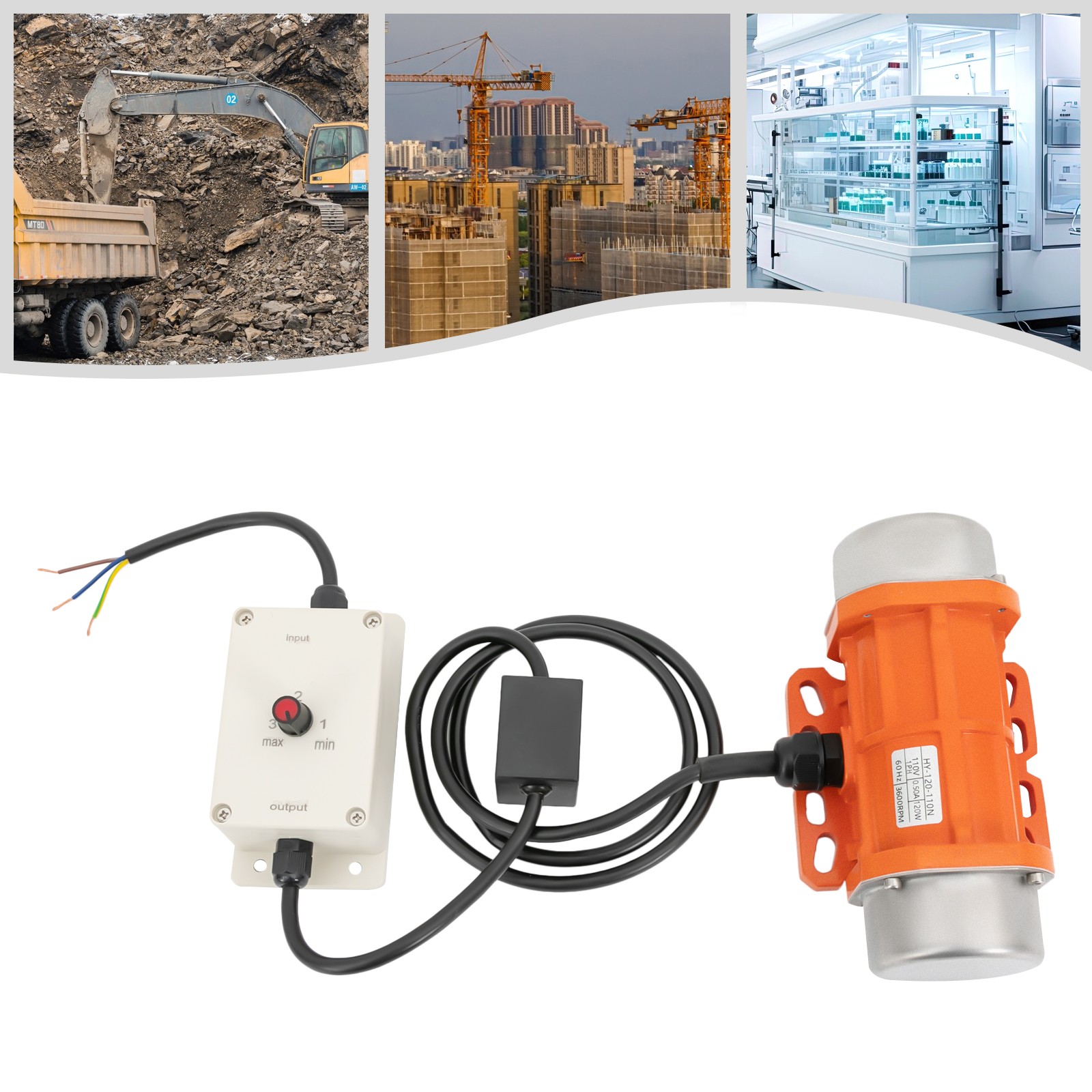
For vibration duty, this motor is the more direct solution. The single-phase motor is rated at 120W and spins at 3600rpm, providing strong shaking force for screens, hoppers, and food-processing equipment. It comes with a stepless speed regulator and a long power cord, so you can dial in the intensity without buying a separate control. The aluminum-alloy housing and spray-molded finish keep it compact and easy to install, and it is rated for industrial and food machinery. The limitation is that it is a vibration motor rather than a drive, so it won't adjust the speed of an external motor or provide three-phase output. It is also the lower-priced of the pair, making it an affordable fit for dedicated vibration tasks.
Final choice by use case
- For a three-phase motor needing speed control and phase conversion, choose the 7.5KW 220V VFD.
- For vibrating screens, hoppers, or food machinery, choose the 110V 120W vibration motor with controller.
- If budget is the main constraint and vibration is the job, the vibration motor is the lower-priced pick.
- If you need to match frequency to variable loads, the VFD's wide frequency range wins.