Choosing between a relay and a limit switch isn't just a parts-bin decision-it's a wiring decision. Both are open-box industrial switching components, but they do different jobs: a relay switches a load when its coil is energized, while a limit switch detects a moving part and breaks or makes a circuit. This head-to-head compares the INDUSTRIAL SPARE AC250V6A relay with the Square D 9007-CO3 limit switch, so you know which one fits your panel, machine, or repair.
Before diving into the specs, separate the two jobs. A relay is an electrically operated switch: feed its coil a control signal, and it closes or opens the load circuit. A limit switch is a mechanically operated switch: a moving cam, arm, or part physically presses the plunger to change the circuit state. That difference drives every other choice. If your control sequence is triggered by a timer, PLC output, or manual pushbutton, a relay is the component doing the switching. If your control sequence needs to know where a machine part is, the limit switch is the component providing that feedback.
Quick verdict
Go with the INDUSTRIAL SPARE AC250V6A relay when your circuit needs a relay to switch a load from a coil signal. Go with the Square D 9007-CO3 limit switch when you need position sensing with a 10A/600VAC rating and a DPDT-DB contact arrangement.
At a glance
| What matters | INDUSTRIAL SPARE AC250V6A Relay | Square D 9007-CO3 Limit Switch |
|---|---|---|
| Price | USD 15.00 | USD 52.89 |
| Component type | Relay | Snap-action limit switch |
| Electrical rating | 6A at 250V AC | 10A at 600V AC |
| Condition | New - Open box | New - Open box |
| Brand | INDUSTRIAL SPARE | Square D |
Where each product wins
- The relay wins when your control design calls for a relay and you want to leave position detection to a separate component.
- The limit switch wins when your machine needs position detection. The Square D's DPDT-DB contact arrangement gives you a defined double-break switching pattern that suits limit-switch duty.
Product notes
INDUSTRIAL SPARE AC250V6A Relay

This relay is the pairing's relay-style option. If your control circuit already calls for a relay rather than a mechanical limit switch, this is the part that fits that role. Choose it when you need to energize a load with a coil signal and you want to leave position sensing to a separate component. Its limitation is that it is not a limit switch, so it will not physically trip from a moving cam or plunger. You'll need another component to detect position in the machine. As a relay, it keeps the switching path straightforward when a coil signal is already present.
Square D 9007-CO3 Limit Switch
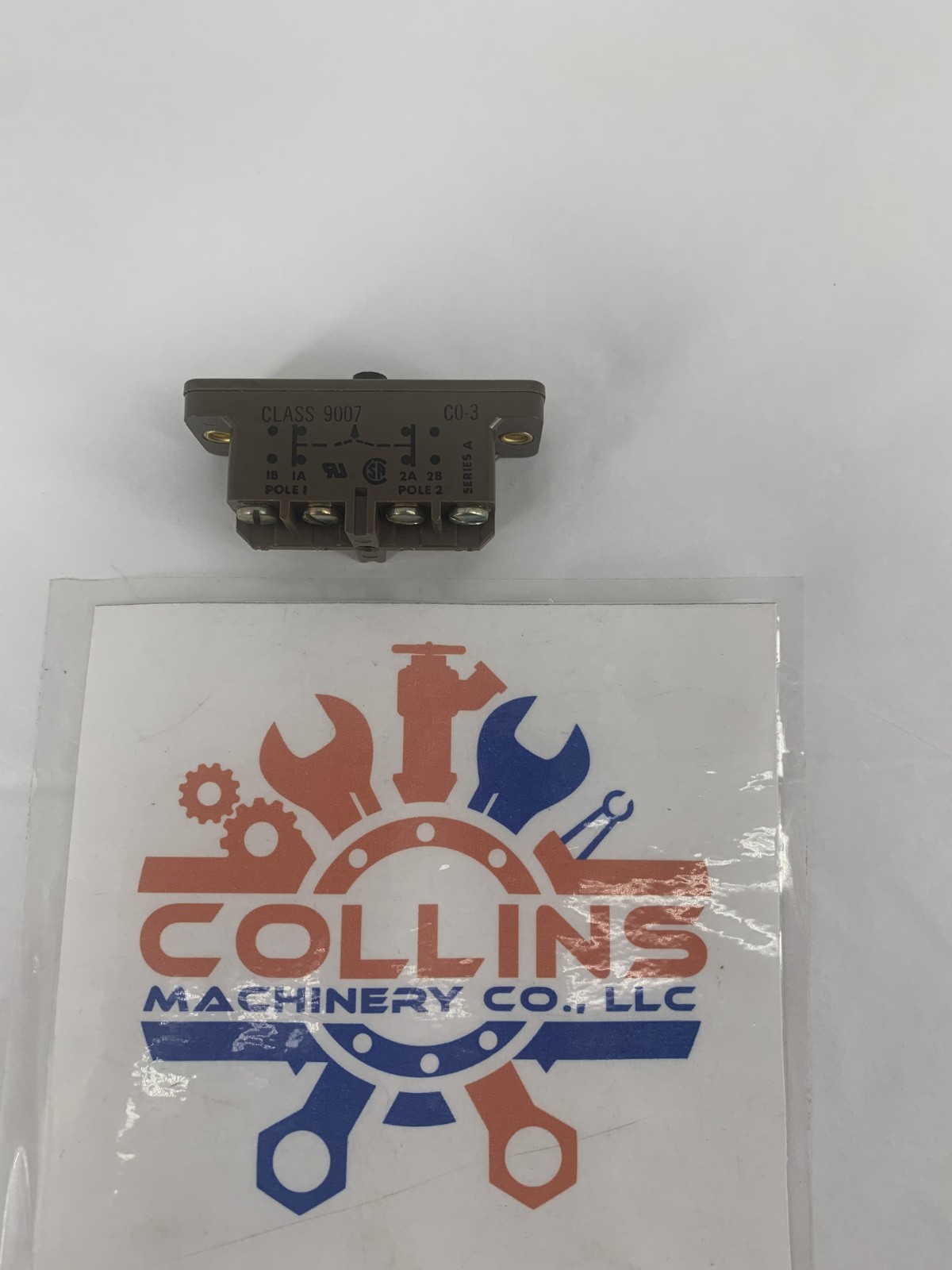
This Square D component is the position-sensing specialist here, with a brown housing and black plunger that make the actuation style clear. It accepts wire gauges from AWG 22 to AWG 14, giving you wiring flexibility in the control panel. Choose it when your machine needs a limit switch rather than a relay. The limitation is that it is not a relay: its coil voltage is Not Applicable (0 Volts), so you won't get relay-style coil switching from this unit. In exchange, the 9007-CO3 is built for snap-action limit-switch duty on commercial equipment, which matches its position-sensing role.
Final choice by use case
For a relay-based switching task, the INDUSTRIAL SPARE AC250V6A relay is the simpler fit. For a machine position-sensing task, the Square D 9007-CO3 limit switch is the component that belongs in the circuit.