When you're working on a servo stepper motion control project, the first decision isn't which product is better. It's which part of the system is missing. The DM556 Digital Stepper Motor Driver and the Schneider Electric LMHAE572C Industrial Motion Control Stepper Motor sit on opposite sides of that question: one sends step pulses, the other turns them into mechanical motion. Because they do different jobs, a useful head-to-head has to focus on the role each component plays in your build.
Quick verdict
If you need a driver, the DM556 is the right component at $18.52. If you need a motor, the Schneider Electric LMHAE572C is the right component at $325.00. They aren't interchangeable, and the practical question is which half of the motion system your machine is missing.
At a glance
| DM556 Stepper Motor Driver | Schneider Electric LMHAE572C | |
|---|---|---|
| Listed price | USD 18.52 | USD 325.00 |
| Role | Stepper motor driver | Stepper motor |
| Condition | New | New - Open box |
| Price bar |
Where each product wins
The DM556 wins when the missing piece is the control side. It gives you an adjustable driver for NEMA 17, NEMA 23, and NEMA 34 motors, with a 20-50V DC input and output current from 1.4A to 5.6A. If you already own a stepper motor, this is the component that turns step and direction signals into motion.
The Schneider LMHAE572C wins when you need the motor itself. It is a new unit with a specific model number and United States origin, so it suits an industrial motion control project where matching a replacement motor matters. You'll still need external drive electronics, but the motor side of the system is covered.
Product notes
DM556 Digital Stepper Motor Driver
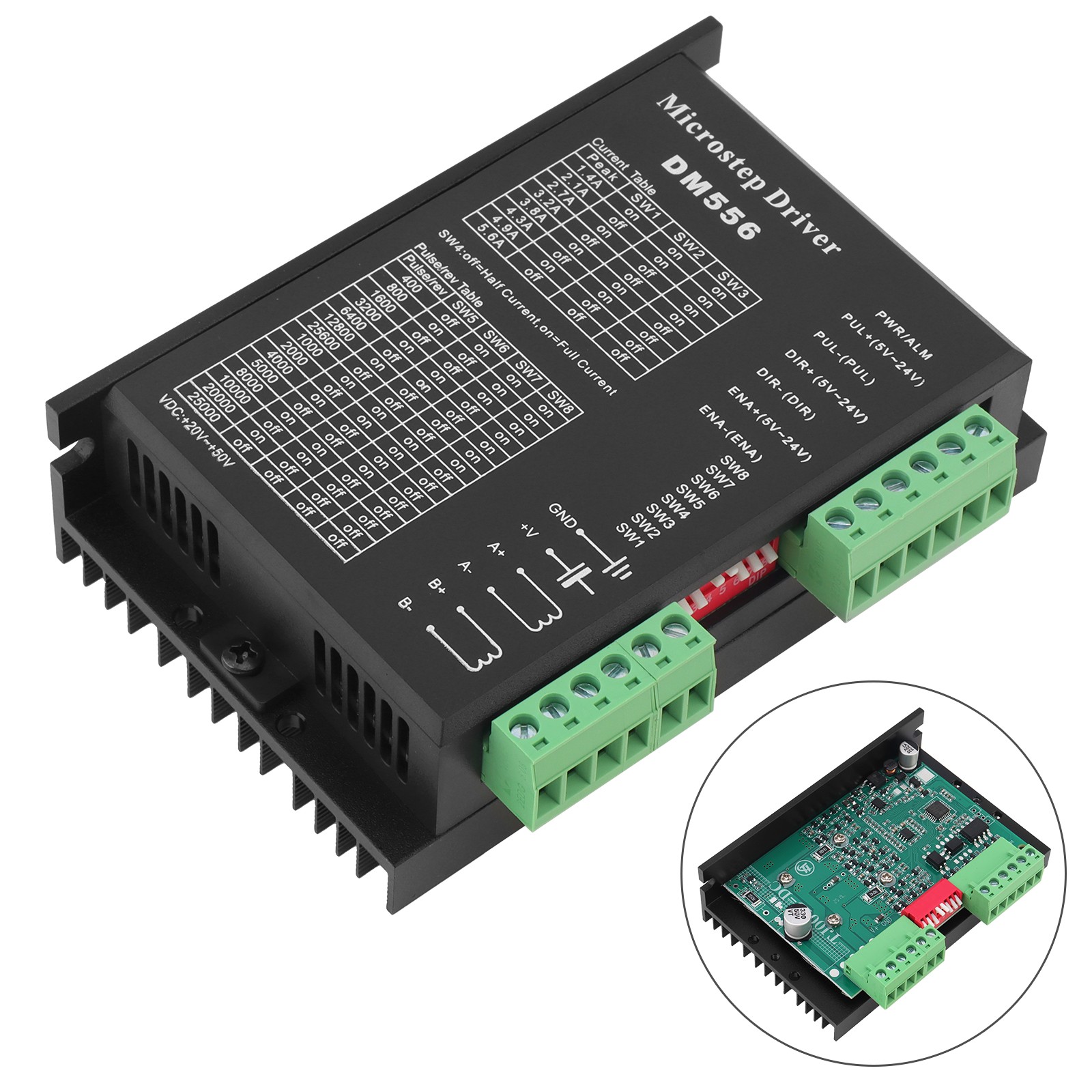
For the money, the DM556 is a practical control-side buy. It's a stepper motor driver rated for 20-50V DC input and up to 5.6A output, and it fits NEMA 17, NEMA 23, and NEMA 34 motors. DIP switches let you pick from 16 micro-step resolutions between 400 and 25,600 and eight output current settings between 1.4A and 5.6A, which is helpful when you're tuning a machine for smoother or faster motion. The pulse input accepts up to 200 kHz, and the typical jobs include dispensing machines, woodworking machines, welding machines, winding machines, and packaging equipment. The limitation is clear: this is only the driver. You still need a stepper motor, wiring, and a power supply to make an axis move, so budget for the rest of the system if you're starting from scratch.
Schneider Electric LMHAE572C Stepper Motor
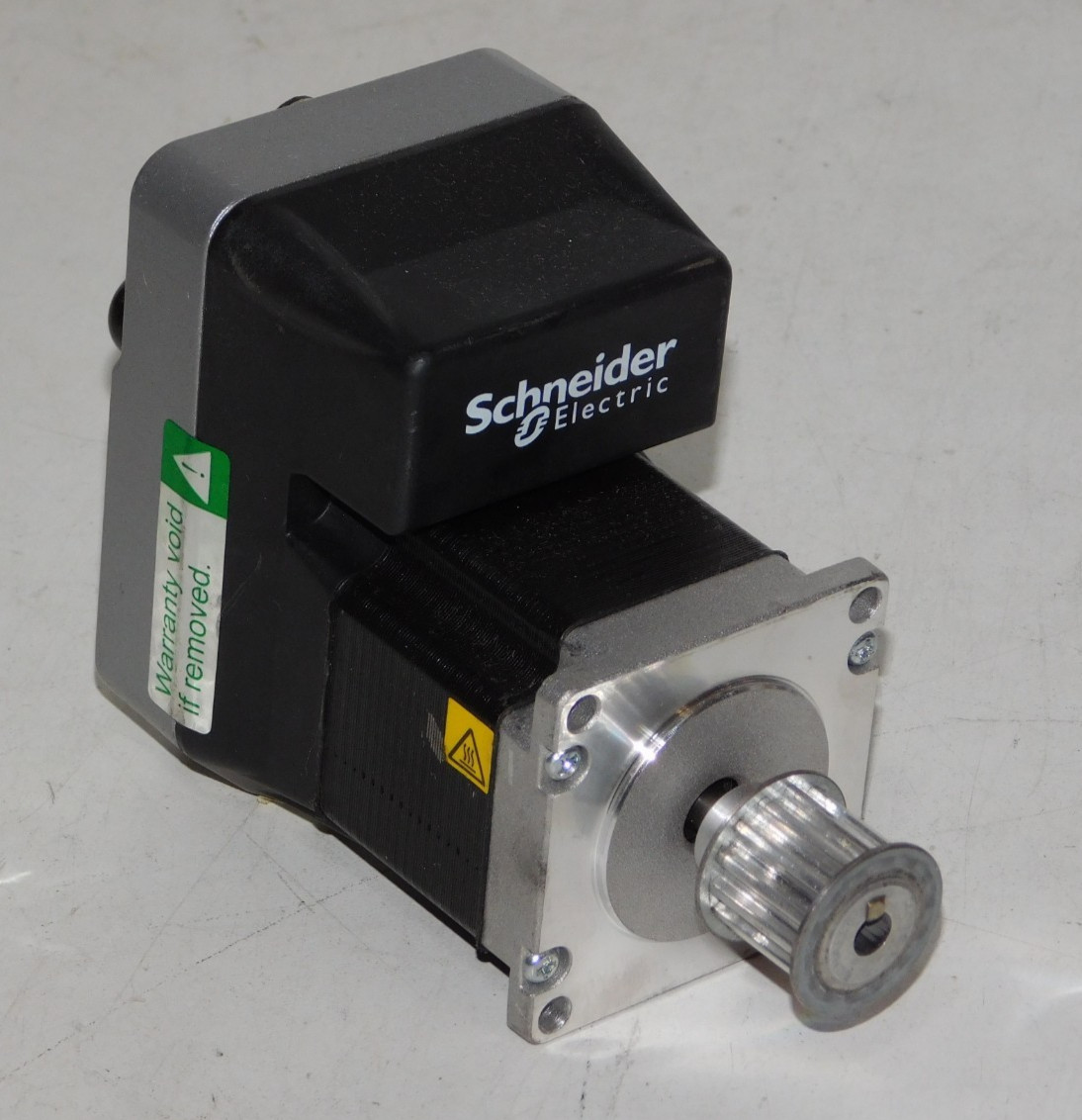
On the motor side, the Schneider Electric LMHAE572C is a different kind of purchase. It is new but open box, described as brand new and unused without the original box, and it carries a specific model number and United States origin. That makes it useful when a project calls for a stepper motor with a clear identity rather than a generic part. The limitation is that it is the motor side only: it does not include the driver or controller needed to generate step pulses, so plan on pairing it with external drive electronics. If your system already has a driver and you need the motor half, this is the direction to take.
Final choice by use case
Choose the DM556 Digital Stepper Motor Driver when you're upgrading the electronics on a machine or building a motion axis and already have the motor. It covers the control half with adjustable current and micro-step settings.
Choose the Schneider Electric LMHAE572C when you need the motor half of an industrial stepper system and you're ready to commit to a motor with its own part identity. It is not a driver, so make sure your system already includes one or plan for it separately.
If you're replacing a failed component, identify whether your current machine is missing the driver or the motor. That answer points to one of these two products and keeps you from spending on the wrong side of the motion pair, so your budget goes to the component that actually needs attention.