When you're outfitting a control panel, you often need both a way to halt equipment quickly and a way to broadcast its status across the floor. These two components-an emergency stop push button and a stack light-solve very different problems, but they're often considered together when planning signaling indicators and operator controls. The question is which one deserves your budget first.
Quick verdict
If you need to stop a machine in its tracks, the emergency stop push button is the right first purchase. It offers a direct, latching shutdown at a low price-$17.50. If you need to keep a whole work area informed about machine status, the industrial stack light, at $89.60, is the better investment for visual communication. For many panels, you'll eventually install both; your immediate risk determines which goes first.
Comparison at a glance
| Product | Price | Price bar | Best for |
|---|---|---|---|
| 2NC 22mm Emergency Stop Push Button | USD 17.50 | Quick, latching machine shutdown | |
| Industrial Stack Light LED Signal Tower | USD 89.60 | Multi-color status and caution signaling |
Where each product wins
- Emergency stop button for immediate control: The emergency stop button gives you a physical, latching switch that stays open after you push it. Its 10A current rating and 660V operating voltage suit industrial control circuits, and the screw terminals simplify wiring into your panel.
- Stack light for broad visibility: The stack light uses high-brightness light sources in red, blue, yellow, and green, with options for flashing, steady, or rotating light and an 85dB buzzer. It's made to be seen from across the room and to convey different states at a glance.
Product notes
2NC Emergency Stop Push Button
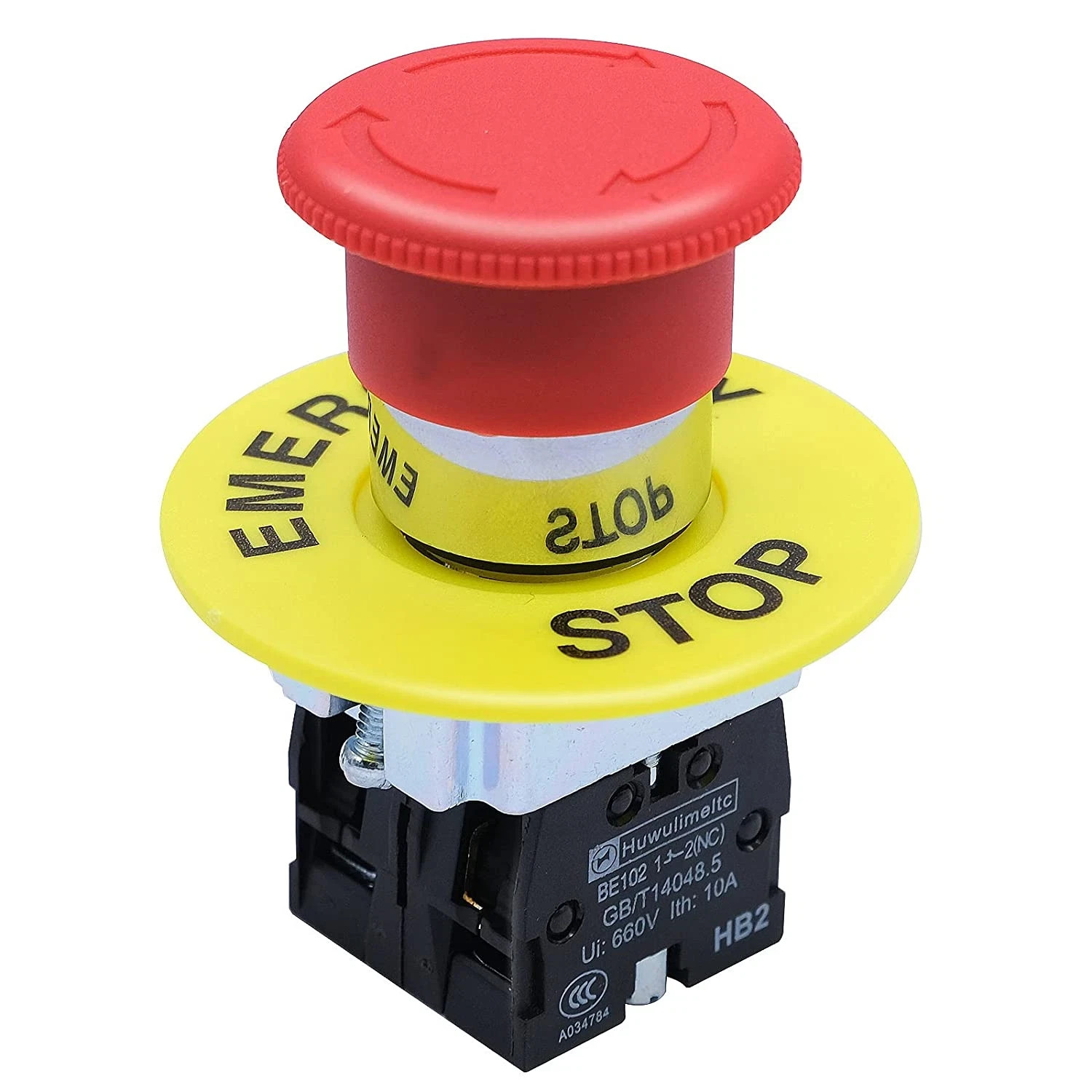
With a 40mm red mushroom actuator and a push-twist operation, this emergency stop button is built for reach and recognition in an emergency. The push-twist operation means you twist to release after a stop, which prevents accidental reset. The normally closed contacts give you a safe state: the circuit is closed until you press, and opening it is what interrupts power. The limitation? It's strictly a control input. It doesn't signal the rest of the floor why the machine stopped, and the 1-way circuit type limits it to a single control path. You'll want separate indicators to provide status feedback.
Industrial Stack Light LED Signal Tower
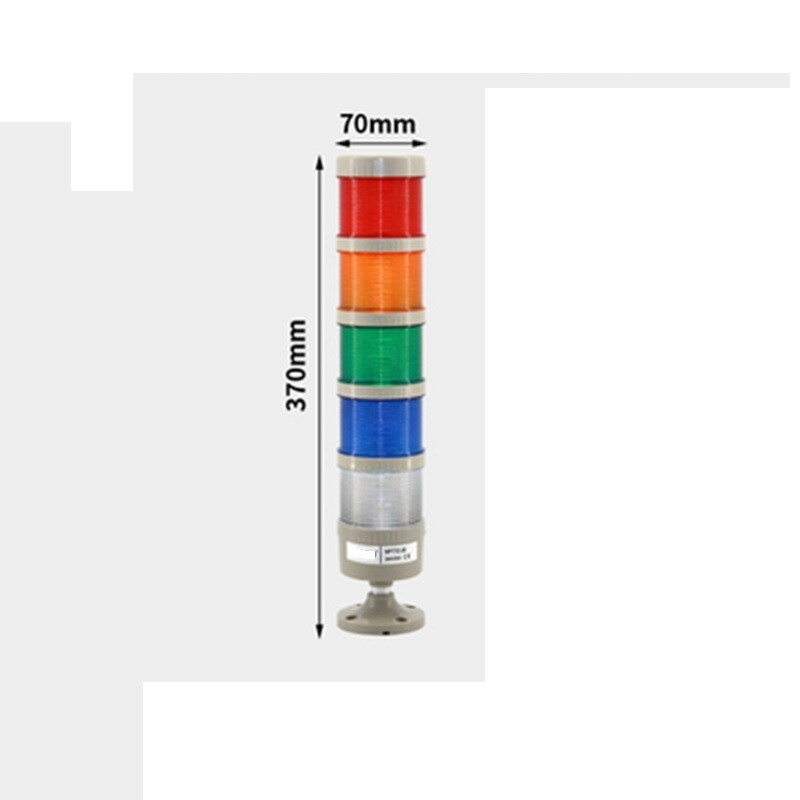
This 5-layer stack light is a visual communication hub for your equipment. With high-brightness LED colors including red, blue, yellow, and green, it can show normal, warning, and fault states without anyone walking over to the panel. The flash mode cycles 60-80 times per minute, and the built-in buzzer adds an audible layer at 85dB. It supports a range of supply voltages-12V, 24V, 110V, or 220V-so it can adapt to different controls. The catch: it doesn't control anything. It's purely an indicator, so you'll still need a separate operator control like an emergency stop to act on the signals it gives you.
Final choice by use case
- For safety shutdown on a single machine: Choose the emergency stop push button. It's the direct control that physically interrupts the circuit when you need it most, and it fits a 22mm panel cutout.
- For floor-wide status communication: Choose the stack light. It turns machine state into a clear visual and audible signal, reducing the need to check panels individually.
- For a complete signaling setup: Install the emergency stop as your primary safety input and mount the stack light where operators can see it. The two complement each other, covering both the moment of failure and the ongoing state of the machine.