When you're maintaining or expanding an industrial network that ties together SCADA systems, edge controllers, and remote terminal units, the fiberoptic hardware you choose has to do more than just pass data. It has to be reliable over distance, match the system architecture you already have, and not create an expensive compatibility headache. For anyone running an H & L Instruments FiberLoop II network, or working with Bristol Babcock RTU equipment, the Model #562 transceiver is a component that deserves a closer look.
H & L Instruments - Model #562 - Fiberoptic Transceiver - FiberLoop II System
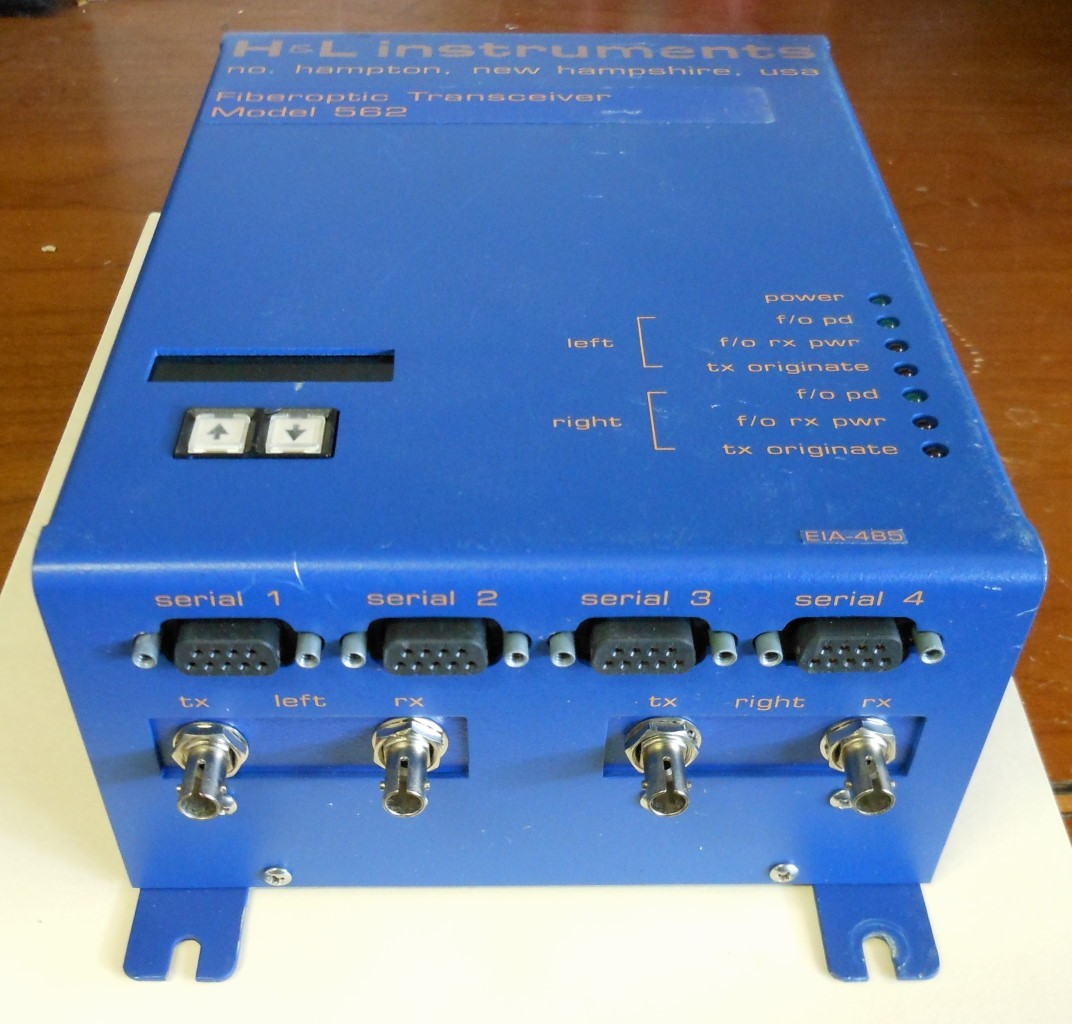
This used transceiver is built to link remote terminal units and network management software in a fiberoptic setup. It is generally implemented in large networks, but it also has capabilities that suit smaller RTU systems. Its previous life was in a Bristol Babcock RTU system with Model RTU 3310 units, which gives you a sense of the environment it came from. It is a United States-made unit with the model designation 562.
Quick Verdict
The H & L Instruments Model #562 is a specialized fiberoptic transceiver that makes sense if you already have a FiberLoop II network or if you're maintaining RTU gear that works with this type of module. At USD 147.32, the used price is reasonable when you consider the cost of comparable industrial networking equipment, but it's not a general-purpose converter. This is a targeted solution for a specific system.
Who It Suits
This is a good fit for industrial controls technicians and engineers who support SCADA and edge control networks using FiberLoop II. It also appeals to anyone with a Bristol Babcock RTU 3310 setup, since this unit came directly from that environment. If you're building a new network from scratch and need a flexible, brand-agnostic fiberoptic link, this is probably not the right starting point.
What Stands Out
The Model #562's main strength is its role as a link between RTUs and network management software. It handles both large and small RTU networks, so it can grow with your system. The fact that it's a United States-made component may also be a point in its favor if you prefer to source industrial parts from the US. The condition is used, but the unit was functional enough to have served in a real RTU installation.
Meaningful Trade-Offs
The most obvious trade-off is the used condition. You don't get the assurance of a sealed new module, and there's always some uncertainty about the remaining life of the electronics. The price of USD 147.32 reflects that used status. Additionally, this transceiver is specifically part of the FiberLoop II system, so it's not designed to be a universal fiber media converter. If your network uses a different protocol, it won't be a simple plug-and-play solution.
Bottom Line
If you're already invested in a FiberLoop II architecture or need a replacement module for a Bristol Babcock RTU system, the H & L Instruments Model #562 is a practical, affordable choice. It fills a specific role well, and at USD 147.32 it's a low-cost way to keep a critical link running. Just be sure the used nature and system-specific design match your needs before you commit.