When you're putting together a motion axis for a CNC machine, 3D printer, or small automation rig, the stepper motor is often the easy part. The harder decision is choosing the control hardware between your step logic and the motor windings. Two options in the same price bracket take different routes: the 2PCS TB6600 Stepper Motor Driver Controller is a pair of high-current drivers that need step and direction pulses, while the SMH 42/57 Stepper Motor Controller is a single-axis unit with built-in operating modes. The right one depends entirely on whether you already have a pulse source or want the controller to act as the brain.
Quick Verdict
If your system already generates step and direction signals, the TB6600 kit is the straightforward pick: two drivers, 0.5-4.0 A per phase, and 9-42 V input support. If you want a self-contained controller that can run pre-programmed positioning moves and remember settings after power loss, the SMH controller is the better match. Both are low-cost entries into stepper motion control, but they serve different stages of the motion chain.
Comparison Table
| Product | Price | Core Function | Price Bar |
|---|---|---|---|
| 2PCS TB6600 Stepper Motor Driver Controller | $16.99 | Step/direction driver; two units in the package | |
| SMH 42/57 Stepper Motor Controller | $18.73 | Standalone controller with motion modes |
Where Each Product Wins
- The TB6600 kit wins for high-current builds: it provides 0.5-4.0 A output, a 9-42 V input range, and selectable subdivision values of 1, 2, 4, 8, 16, and 32. On-board protection covers overheat, overcurrent, undervoltage lockout, and input reverse polarity.
- The SMH controller wins for standalone projects: it has built-in motion profiles, power-off memory, acceleration/deceleration control, and expandable interfaces for sensors or external controls. It runs on a universal 6-36 V DC supply.
Product Notes
2PCS TB6600 Stepper Motor Driver Controller
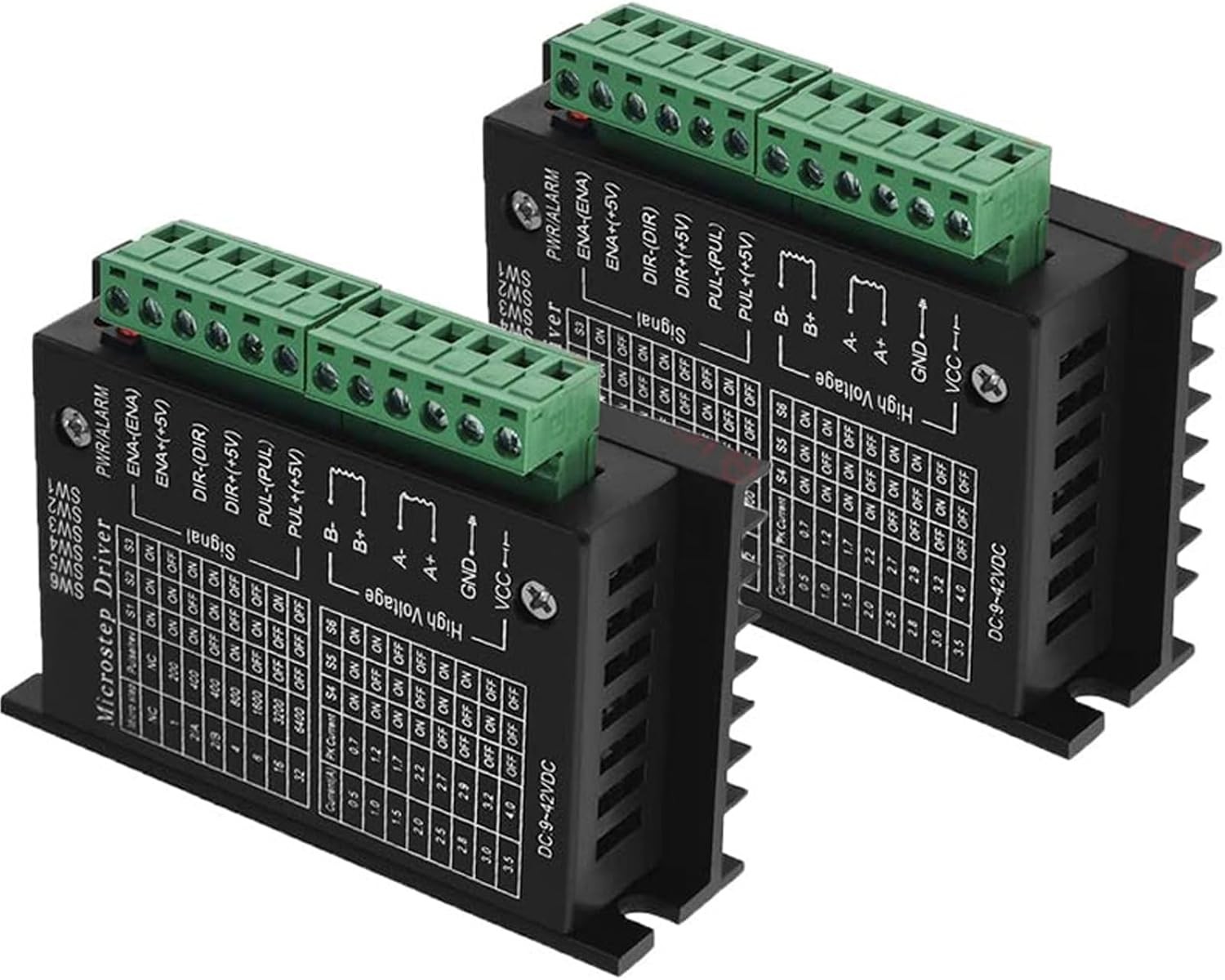
You get two driver boards in this kit, which is handy for a dual-motor axis or a spare. Each board accepts a DC supply from 9 to 42 V and can deliver 0.5 to 4.0 A per phase, so it can handle NEMA 17 and NEMA 23 motors. Subdivision is selectable from 1 through 32, and the optocoupler-isolated inputs keep noise from traveling back into your controller. Built-in protection covers overheat, overcurrent, undervoltage lockout, and input reverse polarity. The catch: it is a driver, not a controller. You need to supply step and direction pulses from a motion controller, PLC, or microcontroller. Choose this when your system already has a pulse source and you want a robust, low-cost way to push current into the motor.
SMH 42/57 Stepper Motor Controller
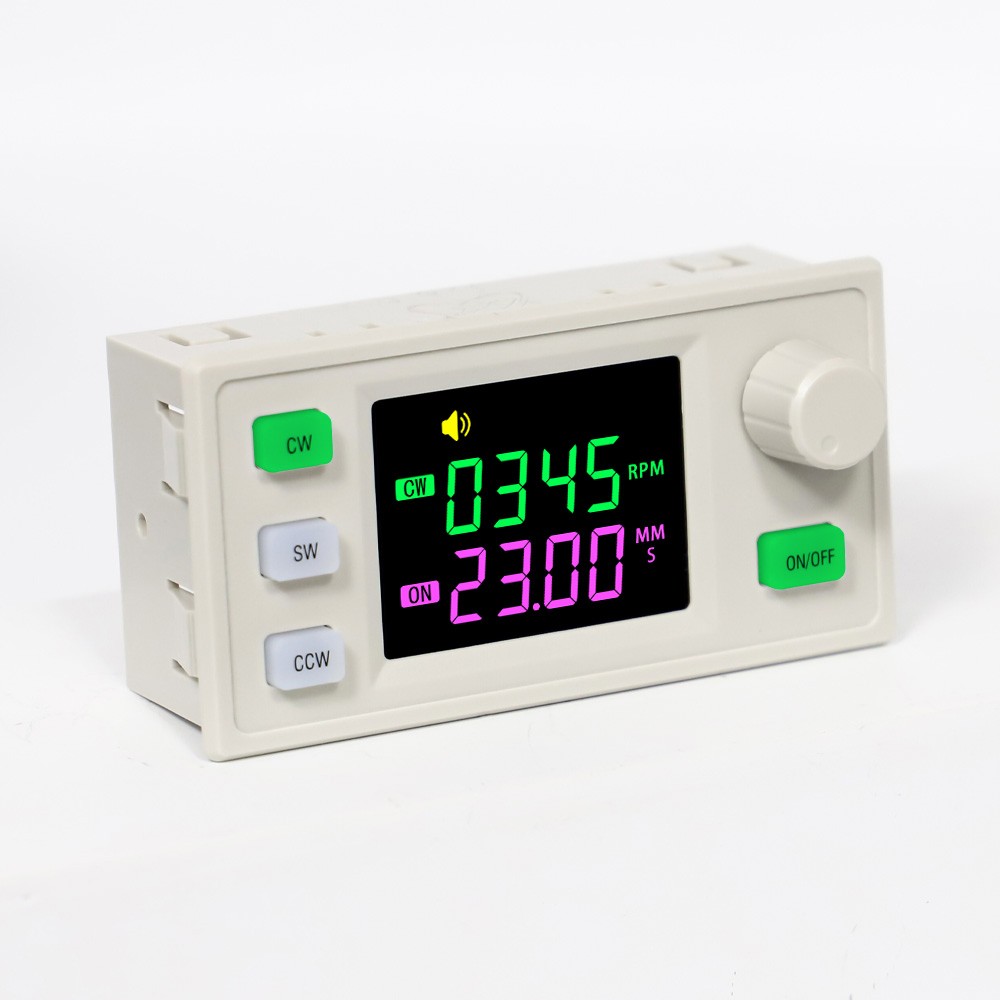
This single-axis controller is built to run a two-phase four-wire stepper motor by itself. It has several built-in operating modes for common motion profiles, and a power-off memory keeps your settings after a power loss, so it starts back where it left off. The acceleration/deceleration control and expandable interfaces for external sensors make it a flexible option for standalone industrial tasks. It runs on a universal DC supply of 6 to 36 V. The limit is that it is a single-axis controller, so one unit drives just one motor at a time. Pick this if you want a self-contained motion brain that doesn't require a host controller.
Final Choice by Use Case
If your setup already includes a controller or microcontroller that generates step and direction pulses, the 2PCS TB6600 kit is the better match-two drivers in the package, a wide current range, and strong protections. If you want a single-axis controller that stores its settings and runs predefined motion routines on its own, the SMH controller is the more complete package. For a project with only one motor and a desire to avoid wiring up a separate pulse source, the SMH controller gets you moving with fewer pieces. For a two-motor build or an upgrade to a larger NEMA 23, the TB6600 kit covers both axes.