When you're outfitting an industrial robot or cobot cell, the component you choose first determines the direction of the whole project. Are you adding a sensor to give an existing arm a sense of touch, or are you trying to bring a decommissioned robot arm back to life? These are two very different purchases: the ATI Industrial Automation Mini45 is a high-precision force torque sensor, while the Staubli RX90 CS7 is a 6-axis industrial robot arm controller. Your decision should hinge on what your system is actually missing.
Quick verdict
Pick the ATI Mini45 if your robot already has a working controller and needs to detect contact, load, or tool interaction with accuracy. It's priced at $1,395.00. Pick the Staubli RX90 CS7 if you have an RX90 arm without its original controller and need a used CS7 unit-just be prepared for a dent and a missing key. It's listed at $2,499.99.
Comparison
| Product | Price | Price bar | Condition | Key details |
|---|---|---|---|---|
| ATI Industrial Automation Mini45 | $1,395.00 | Used | Force torque sensor; measures forces and torques in X, Y, Z; integrated cable included; minor cosmetic wear | |
| Staubli RX90 CS7 6-Axis Industrial Robot Arm Controller | $2,499.99 | Used | 6-axis controller for RX90; CS7 control type; dent on corner; missing key; 1997 model |
Where each product wins
For adding tactile intelligence to an operating arm: The ATI Mini45 delivers the force and torque feedback needed for contact detection, load monitoring, and research applications. It wins when your robot already has a functional controller but lacks the ability to sense its interaction with tools and parts.
For completing a Staubli RX90 system: The Staubli RX90 CS7 controller wins when you have an RX90 arm sitting without its brain. It's a specific control unit for that model, and as a used industrial surplus part, it gives you a path to bring the arm back online-provided you accept the dent and missing key.
Product notes
ATI Industrial Automation Mini45
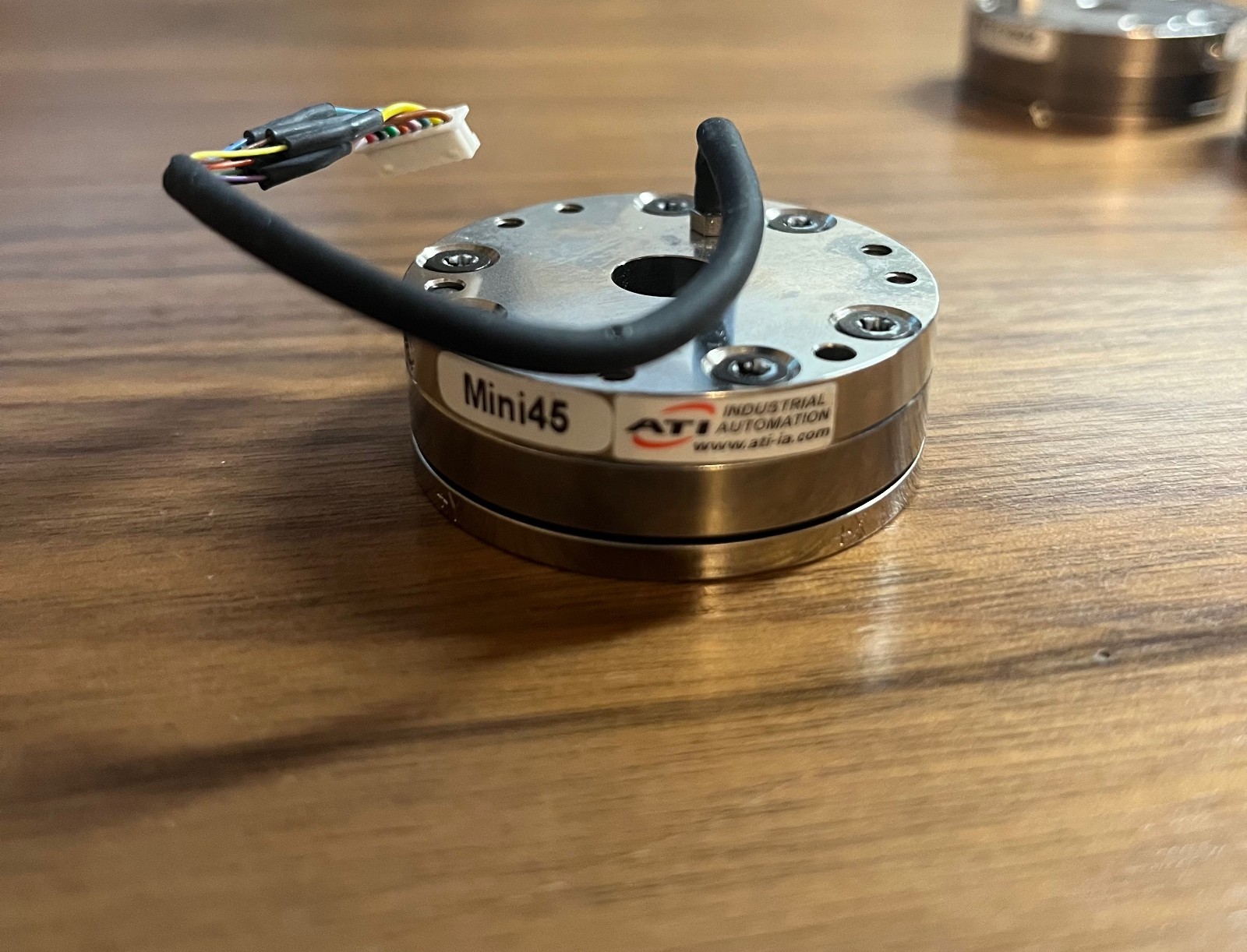
If your robot needs to feel its way through precision work, the Mini45 is a compelling candidate. This force torque sensor measures forces and torques simultaneously in the X, Y, and Z axes, which allows a robotic system to detect contact, load, and tool interaction with high accuracy. It was removed from working automation and research equipment, so it shows minor cosmetic wear; no cracks, bends, or structural damage are observed. One concrete reason to choose it is that it comes with an integrated cable, saving you a separate hunt. On the limitation side, this sensor does not function as a controller; it only provides feedback. If your robot arm lacks a control unit, you'll need to source that elsewhere. Also, the price is per unit, so factor that into your budget.
Staubli RX90 CS7 6-Axis Industrial Robot Arm Controller
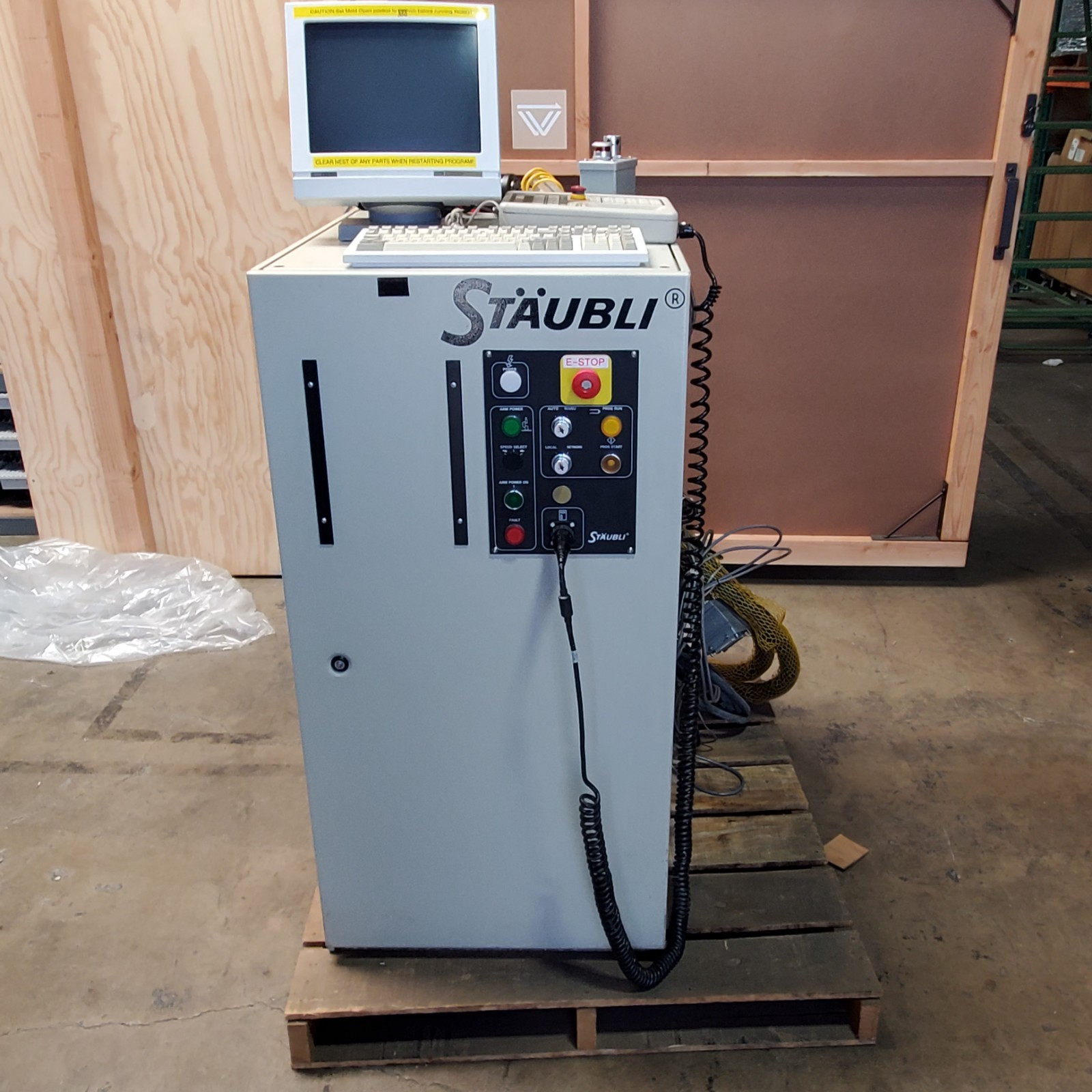
For a controller that specifically matches the Staubli RX90 robot arm, the RX90 CS7 is a direct option. This unit is identified as a 1997 model with a CS7 control type. It's sold by American Industrial Supply Co., a seller that states over 25 years of experience in asset recovery and decommissioning. A concrete reason to consider it is that it is the exact controller type for an RX90, which could be exactly what you need to complete a system. However, there are clear limitations: the unit has a dent on the corner, the key is missing, and only the items shown are included. If you can live with these physical flaws and need a CS7 controller, this is a worthy pick. Otherwise, you may want to look for a cleaner example.
Final choice by use case
- If your robotic cell already moves and needs contact awareness: Choose the ATI Mini45. It gives you the force and torque data needed for delicate assembly, research trials, or end-effector monitoring.
- If you have a Staubli RX90 arm without a controller: Choose the Staubli RX90 CS7. It's the specific controller for that robot, and the used surplus unit gives you a path to get the arm running.
- If you have neither a controller nor a sensor: Decide which gap is harder to fill. A sensor won't move an arm, and a controller won't sense a tool. Identify the missing function and purchase the component that addresses it.