Choosing between the FANUC M-16iB/20 and the AUBO i10 is really a fork between heavy industrial automation and modern collaborative robotics. The FANUC is a 2005 used arm that carries a heavier payload than the AUBO, sold arm-only at a much lower listed price. The AUBO is a new-open-box collaborative robot built for safer human-robot interaction. Your answer depends on whether you need raw lifting power or a working environment where people and robots share space.
Quick verdict
If you have a controller, teach pendant, and cabling ready, the FANUC gives you major payload for a fraction of the AUBO's cost. If you want a collaborative arm with built-in safety functions, the AUBO i10 is the more complete industrial robotic arm.
At a glance
| Feature | FANUC M-16iB/20 | AUBO i10 |
|---|---|---|
| Listed price | USD 1,800.00 | USD 22,000.00 |
| Condition | Used | New - Open box |
| Payload | 20 kg | 10 kg |
| Axes | 6 | 6 |
| Sold as | Arm only | Robotic arm assembly |
Before you decide, think about your existing automation infrastructure. The FANUC's arm-only format assumes you have control hardware or a plan to source it. The AUBO's collaborative design assumes you want the robot to share space with humans and are willing to pay for that capability.
Where each wins
FANUC M-16iB/20. It wins on raw capacity and lower price. With a payload that doubles the AUBO's, it delivers far more lifting strength for the money. The lack of a controller and cables is a real hurdle unless you have supporting hardware, but for a facility with control parts already on hand, it is a strong option.
AUBO i10. It wins on condition and collaboration. The newer, open-box status and certified safety functions make it a safer, more turnkey tool for human-centered work. If you want to deploy a collaborative robot without building a full guard system around it, the AUBO is the more practical route.
Product notes
FANUC M-16iB/20
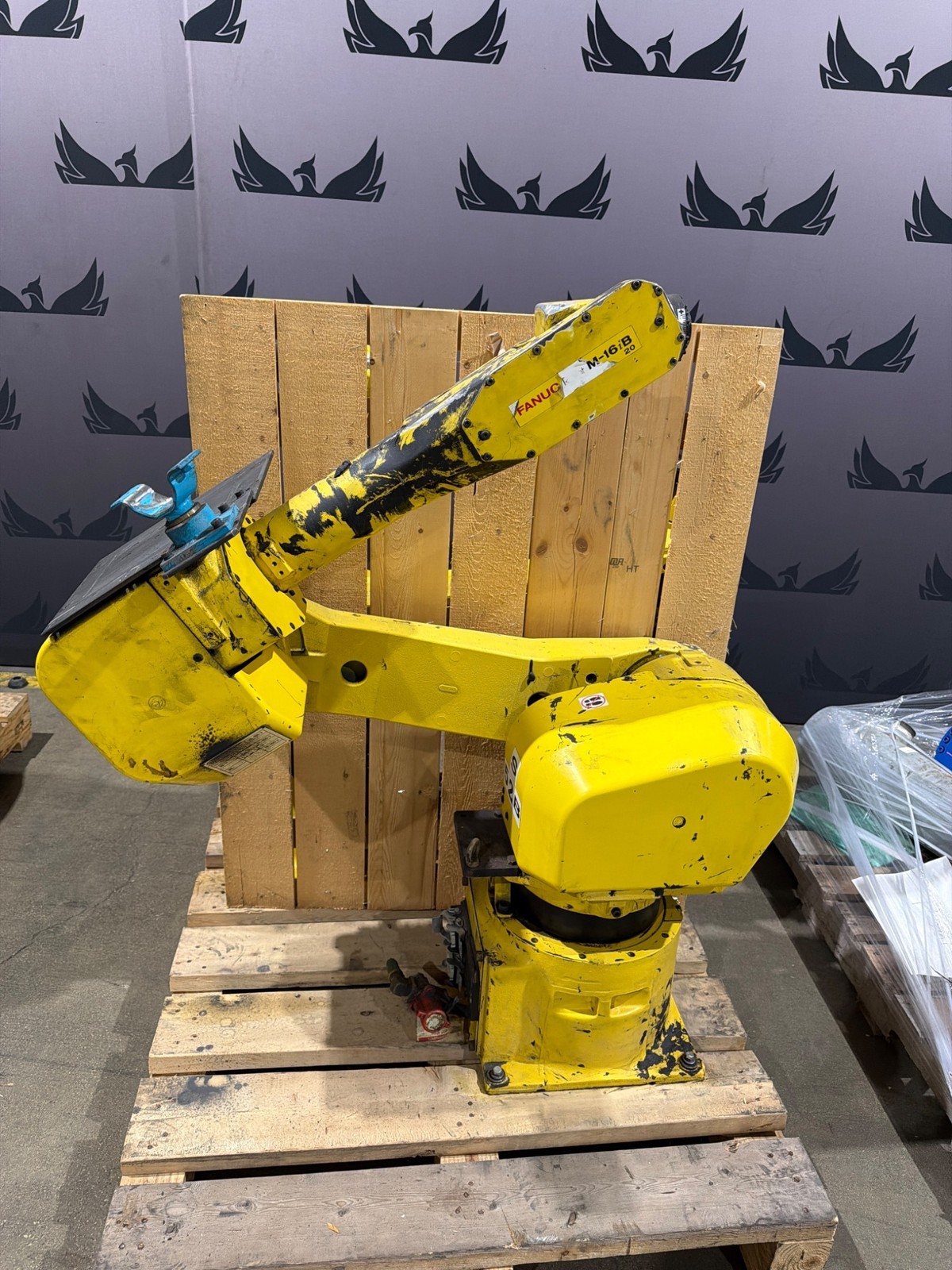
At $1,800, this is the low-price entry in this head-to-head, and it brings a 20 kg payload. The catch is it is arm-only: no controller, teach pendant, or cables are included, so the true cost of deployment depends on what you already have on the shelf. It is also a 2005 unit with cosmetic wear and paint loss, so expect visible signs of prior industrial use. If you already have the controller and cabling from an existing cell, this can be an economical way to expand capacity. If you are starting fresh, add the cost of missing peripherals to your budget before relying on the lower listed price.
AUBO i10
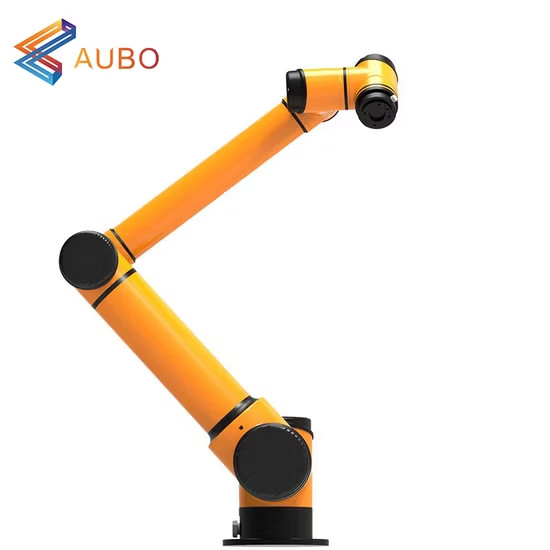
The AUBO i10 is the more self-contained choice at $22,000, with a new-open-box condition. Its collaborative features-hand-guide operation, power and force limiting, certified safety functions-let it work beside people with less guarding, which can simplify cell layout and safety planning. The 10 kg payload covers moderate tasks like welding and packing, but it is half the FANUC's capacity. The higher price buys a newer, safer robotic arm assembly, but you need to decide whether those advantages justify the cost for your production volume and part weights. The AUBO is worth the premium when your parts stay within the 10 kg limit and your priority is safe, flexible automation.
Final choice by use case
Choose the FANUC M-16iB/20 if you already have a six-axis control stack and need a heavy-payload arm for a fixed cell. Choose the AUBO i10 if you are starting fresh, want to automate alongside staff, and prioritize built-in collaborative safety over maximum payload.