Automation buyers often face a choice between a small dedicated screwdriving arm and a full collaborative robot. One is built for one repeatable motion; the other is built to do many jobs alongside people. In the industrial robotics cobots space, that trade-off comes down to payload, flexibility, and how much integration work you are willing to take on. Here is how to decide.
Quick verdict
If your workspace needs a compact, low-cost way to do repetitive screwdriving on a linear path, the IAI 2-Axis Screwdriver Arm is the pragmatic pick. If the work calls for a collaborative robot that can handle heavier payloads near people, the AUBO i10 is the serious upgrade. The table below shows the core difference.
| Decision point | IAI 2-Axis Screwdriver Arm | AUBO i10 Cobot |
|---|---|---|
| Listed price | USD 499.99 | USD 22,000.00 |
| Price position | ||
| Condition | Used | New - Open box |
| Axis layout | Two-axis linear arm | Six-axis collaborative arm |
Where each product wins
IAI 2-Axis Screwdriver Arm
- Its listed price keeps the entry point much lower, which is helpful for a single-station screwdriving or linear-motion project.
- The DSRC CAN controllers on the actuators make it a better fit for a builder who plans to handle controls integration.
- If you already have a servo drive to pair with the screwgun motor, the biggest missing piece is already handled.
AUBO i10 collaborative robot
- The 10 kg payload and six-axis collaborative design let it take on more varied jobs, including packing, welding, and tasks where a person works alongside the robot.
- New-open-box condition means you are not buying a unit that has already worked a production line.
- It is built for collaborative operation, so it suits facilities that want human-robot interaction instead of a locked-down automation cell.
Product notes
IAI 2x Axis Screwdriver Linear Robot Arm 8" Z 4" Y Movement DSRC CAN Controllers
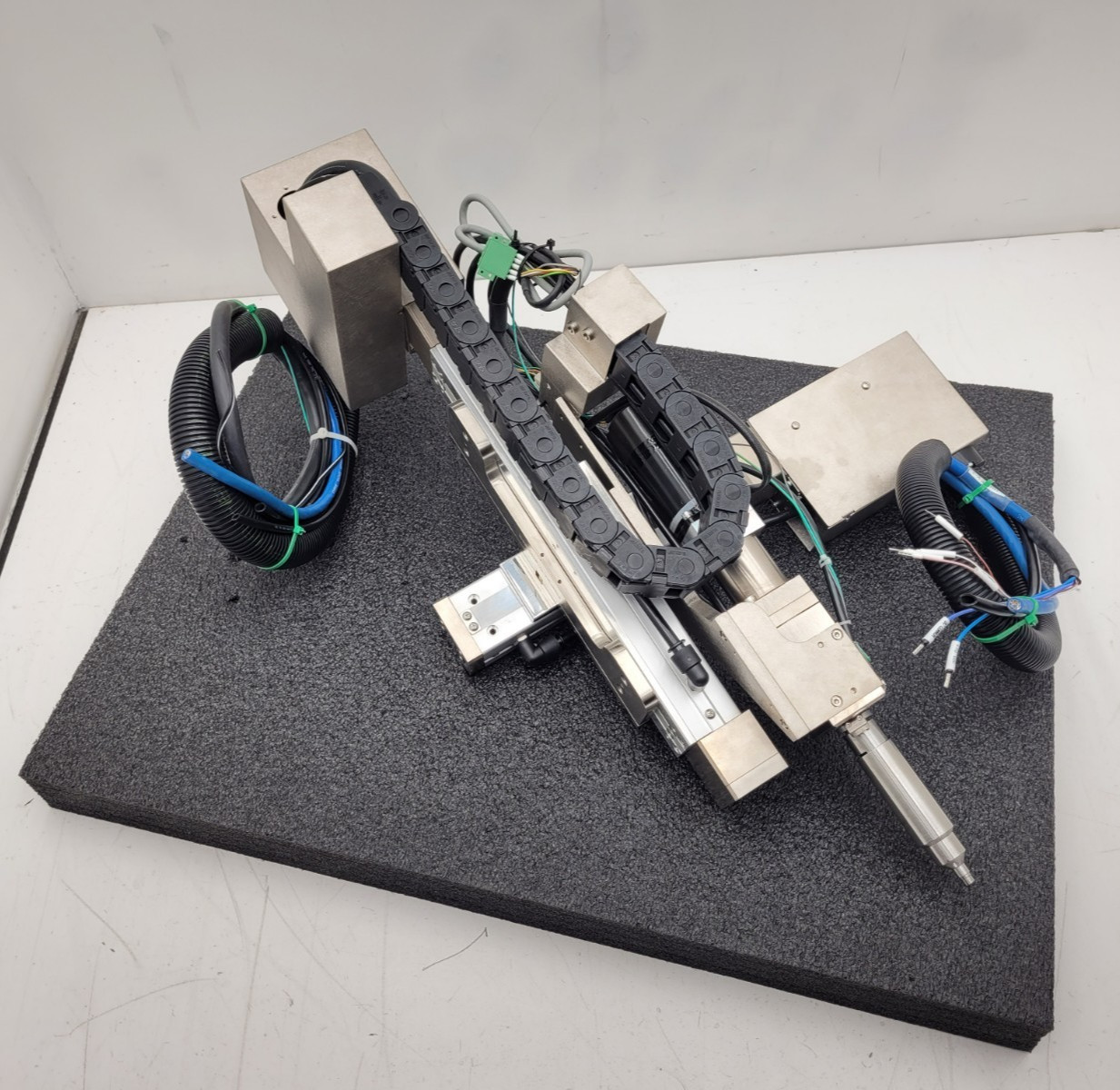
This IAI arm comes as a used unit with a two-axis linear layout, 8" of Z travel, and 4" of Y travel. The actuators are equipped with DSRC CAN controllers, and the screwgun motor is a Yaskawa SGME-01AFNS11. That combination makes sense if your automation task is a defined screwdriving path and your team can handle the control wiring. The main limitation is that the servo drive for the screwgun motor is not included, so you will need to source one and confirm the CAN protocol before the arm moves. For a shop with electrical and controls experience, the lower listed price is a good reason to take on that integration work. For someone expecting plug-and-play operation, this is not the right arm.
AUBO i10 collaborative robot
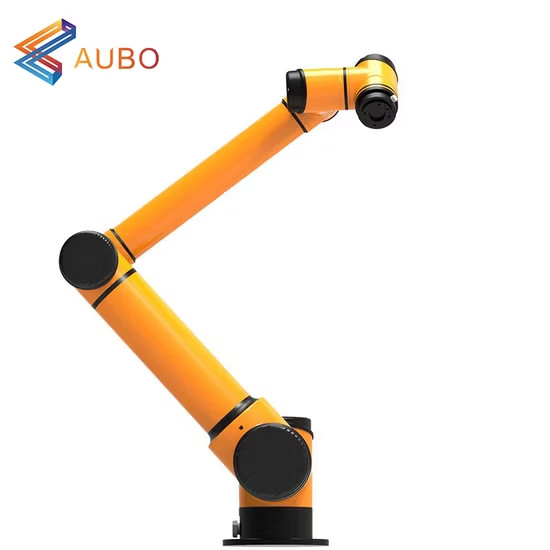
The AUBO i10 is a new-open-box collaborative robot with a payload rating that suits heavier industrial jobs. Its six-axis design is meant for tasks like packing and welding, and its collaborative nature is the strongest reason to choose it over a fixed two-axis unit. If your facility wants a robot that can work near people with a collaborative design, the i10 is the more appropriate machine. The limitation is the price: it is a much larger investment, and for a simple screwdriving routine, most of that capability would go unused. The i10 makes the most sense when you need flexibility across multiple tasks and a payload capacity that a small linear arm cannot offer. It is a bigger commitment, but it is also a more versatile production asset.
Final choice by use case
- Choose the IAI 2-Axis Screwdriver Arm when your project is a defined screwdriving or linear-motion task and you are prepared to integrate the missing servo drive. At USD 499.99, it is the lower-cost way to bring a two-axis arm into your shop.
- Choose the AUBO i10 collaborative robot when you need flexible, human-adjacent automation with a 10 kg payload and collaborative operation. At USD 22,000.00, it is a far bigger budget line, but it delivers the capability a linear arm cannot.
Once you know whether your priority is a low-cost linear screwdriving arm or a versatile collaborative robot, the industrial robotics cobots decision becomes much clearer.